Our Blogs

Different, Not Less: Joey Yuen’s Valedictorian Address, Specialist Diploma in Learning Support

Share

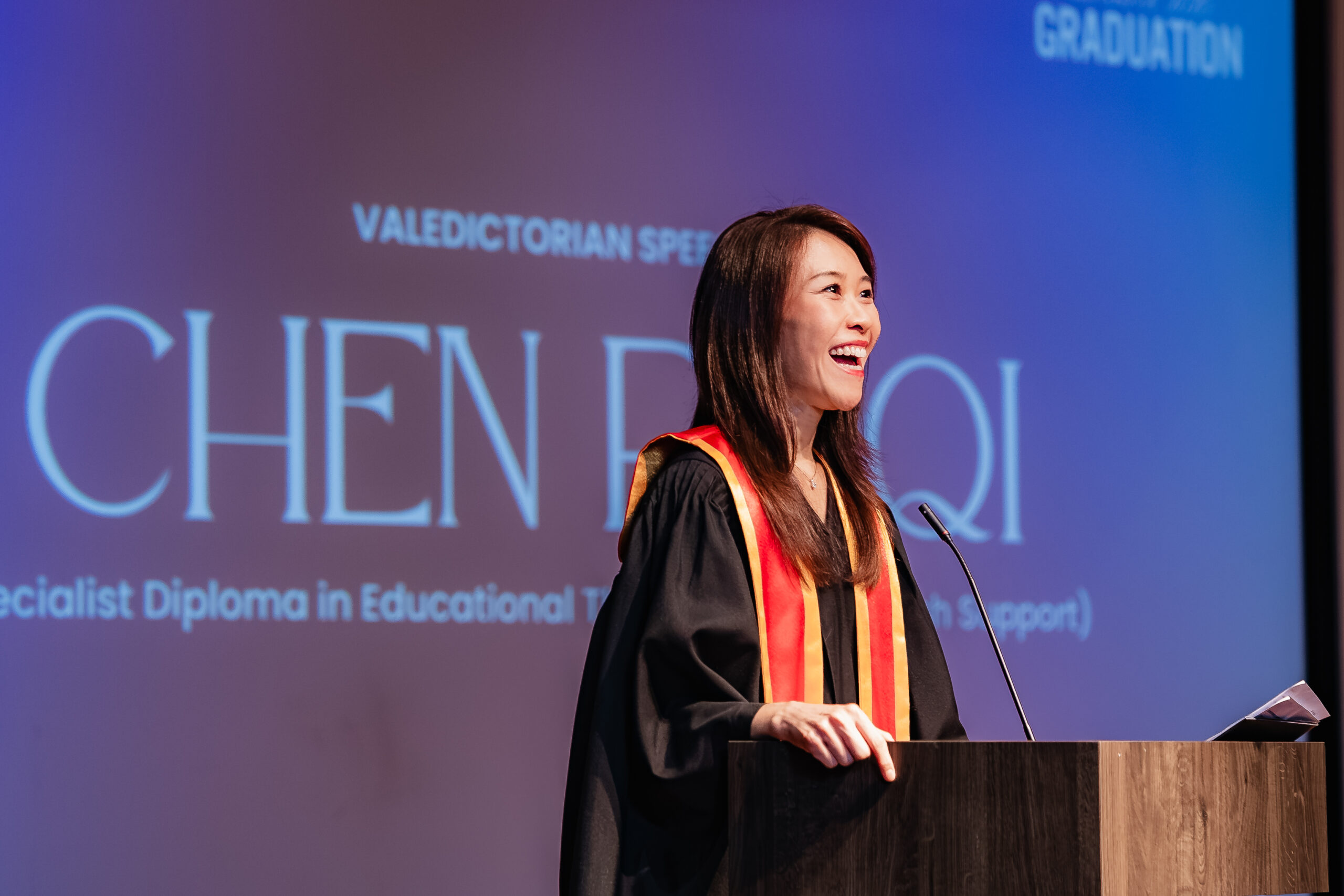
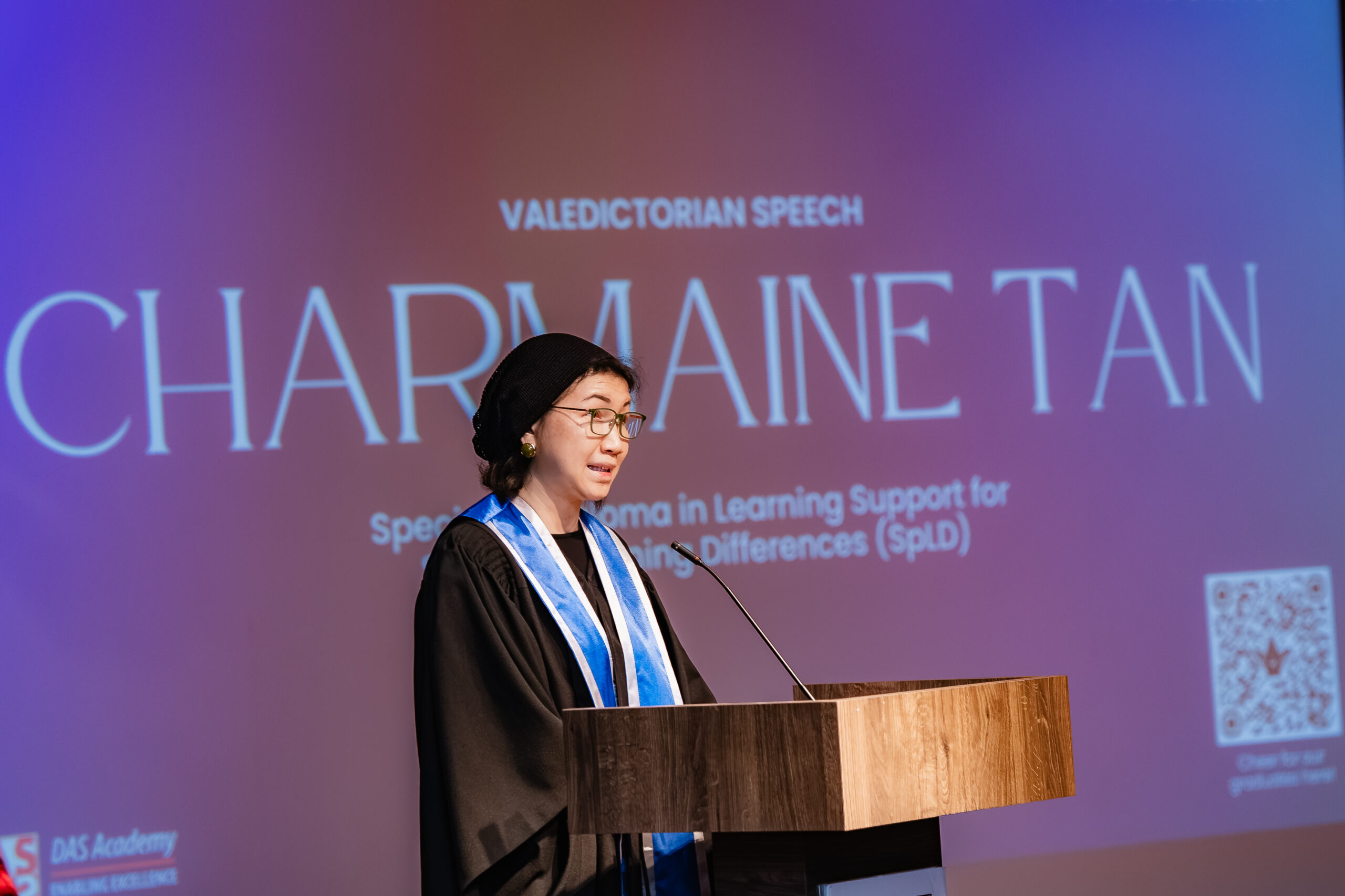
Good morning, everyone – fellow graduates, esteemed faculty, DAS board members, distinguished guests, and family and friends. It is a privilege to deliver this speech today as the valedictorian of the Specialist Diploma in Learning Support for Specific Learning Differences. I am truly honoured and grateful for this opportunity.

To be transparent, when Ms Siti and Dr June first contacted me about delivering this speech, I was apprehensive. As someone with Level 2 Autism, public speaking does not come easily. In fact, even attending this graduation ceremony is a challenge. I was apprehensive about the lights, the noise, the crowds, and the unpredictability – all of which can be extremely overwhelming for someone with autism. I am also diagnosed with a neurological condition that causes me to have motor tics or even experience a seizure when overwhelmed. But I also knew how important it was to be here today – not just for myself, but to represent voices like mine.

My journey into special education began when my youngest brother, who has ADHD and dyslexia, received support through DAS. I saw how early intervention transformed his confidence and future. From a student with behavioural and academic struggles, my brother grew into a confident learner who eventually graduated from NTU and now serves as a civil servant. His journey is a powerful reminder that with the right support and timely intervention, every child can thrive and rewrite their own story.

At the time I enrolled in this programme, I was working full-time as an educator in a mainstream kindergarten. Outside of work, I had also established a tuition programme for students from low-income families or those with diverse learning and developmental needs. Many of the children I worked with struggled with language, and I realised that this barrier often affected their ability to access learning in every other subject. I wanted to do more. I wanted to equip myself with the right knowledge and tools so I could offer the support they deserved, especially for those who might not have access to intervention outside of school.

Growing up with Autism and ADHD, I often felt like I was living in a different world from everyone else. People saw my silence or differences and assumed I wasn’t trying, or that I didn’t understand – but I did. Meltdowns or shutdowns that might have seemed uncalled for were actually my way of coping with the overload happening around me. The birds chirping, the clock ticking, the buzzing of fluorescent lights, the bright sunlight seeping through the blinds, the low hum of a loose projector cable, the spinning shadows cast by the ceiling fan – all these layers of sensory input could pile up until they became too much for my brain and body to manage.

Living through this taught me something important: individuals with needs do not need “fixing”, they need to be understood. What they needed is recognition, recognition that learning doesn’t follow a single path, that communication can take many forms, and that being different doesn’t mean being less.

My experiences growing up with needs stay with me in my work as a teacher. They remind me that every behaviour has a purpose, and that what might seem like defiance or disinterest could simply be a way of coping with challenges we cannot see. They also remind me that when it seems like a student can’t do something, it often just means they can’t do it YET. That one word, YET, changes how I respond. Instead of lowering my expectations, I start looking for ways to help them get there. And sometimes, that belief is what gives a learner the courage to try again.

Today, I work as a SPED educator in an autism school for students with moderate to severe autism. I’m grateful and honoured as well to my reporting officer, Ms Gloria, who has taken the time to support me here today. All of my students have a primary diagnosis of autism, alongside intellectual and language challenges. Most of them are non-verbal, and for them, learning language is not just about literacy; it is a bridge to the world around them. This course has enabled me to support their language development and find ways to make learning accessible and engaging, tailored to their individual strengths. Teaching them to read and write isn’t just about academic progress or examinations. It gives them a voice. With each new word they learn, they grow more confident in using their Augmentative and Alternative Communication devices, also known as AAC. They begin to tell me what they think, what they feel, what they need. And in those moments, I see them not just learning, but connecting. That, to me, is what education is truly about.

The strategies I’ve learned are now embedded in my daily teaching and in my belief that no learner is too complex to be understood, supported, and celebrated.

Through this course, I’ve learned so much – not only from the lectures, but from the incredible people I had the privilege to learn beside. It is heartening to see how far we’ve come as a society, growing in our understanding and acceptance of neurodiversity and learning differences. The fact that we are all here, united by a shared commitment to support diverse learners, gives me hope for the future of an inclusive education landscape in Singapore.

To all the parents of children with needs, and to MY parents – thank you. Thank you for being your child’s fiercest advocates, their safe space, and their biggest cheerleaders. Your love and effort do not go unnoticed.

To my fellow educators: Thank you for investing your time and heart into this journey. Because of you, more students will be seen, heard, and supported. Your impact is lifelong.

And to my lecturers at DAS Academy, and to my practicum supervisor, Dr June: Thank you for empowering me with the tools and wisdom I need to do this work well. You didn’t just teach me; you inspired me.

To all the graduates today: may we carry forward what we’ve learned with humility, compassion, and the unwavering belief that every learner has potential, and that every learner matters. Thank you.